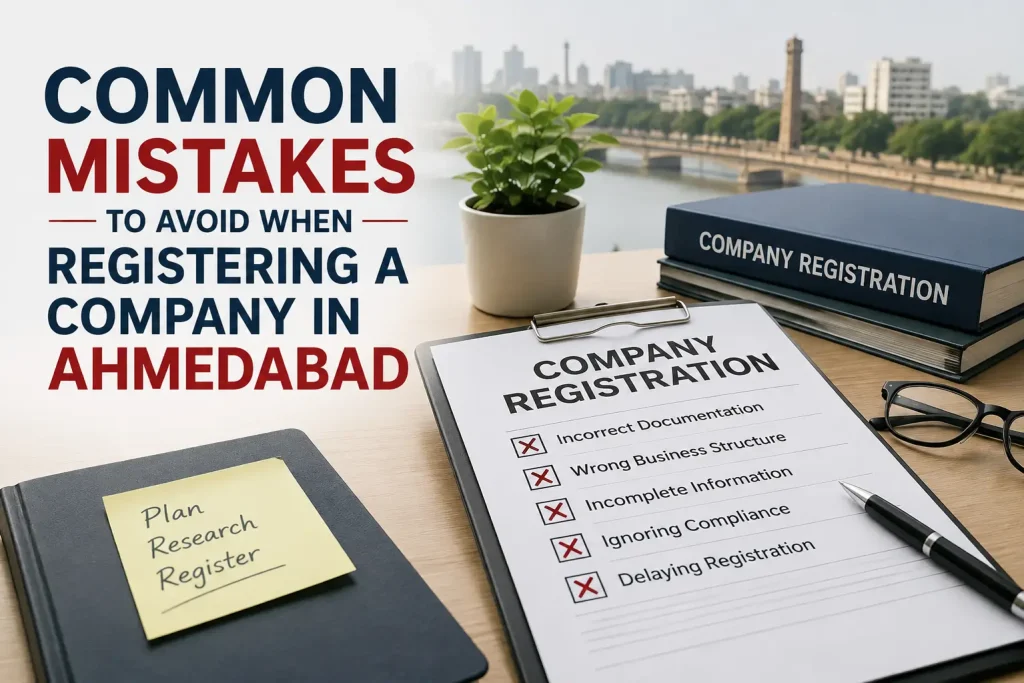
Starting a business in Ahmedabad can be an exciting opportunity, especially with the city’s growing startup ecosystem and strong presence of manufacturing, trading, technology, and service businesses. However, registering a company involves more than simply submitting an application. Entrepreneurs need to make important decisions regarding business structure, documentation, taxation and ongoing compliance. Understanding the common mistakes before starting company registration in Ahmedabad can help business owners avoid unnecessary delays and complications.
Whether you are planning a private limited company, LLP, or another suitable business structure, proper planning is important from the beginning. Taking professional guidance for Company Registration Ahmedabad can help entrepreneurs understand the documentation, registration process, and compliance responsibilities associated with their chosen business structure.
1. Choosing the Wrong Business Structure
One of the first decisions an entrepreneur needs to make is selecting the appropriate legal structure. Many business owners choose a structure simply because it is popular without considering their actual business requirements.
A private limited company may be suitable for businesses looking for a structured corporate setup and future investment opportunities. An LLP can be considered by partners who want limited liability with a comparatively flexible structure. Other options may be suitable for individual entrepreneurs or smaller businesses.
Before proceeding with company registration, consider factors such as the number of owners, investment plans, liability, taxation, compliance requirements, and long-term business goals. Choosing the wrong structure at the beginning can create unnecessary complications when the business expands.
2. Providing Incorrect or Incomplete Documents
Documentation is an important part of Business Registration Ahmedabad. Entrepreneurs sometimes submit documents with incorrect information, outdated details, spelling differences, or incomplete addresses. Even a small mismatch between documents can lead to delays or additional requirements during the registration process.
Generally, promoters and directors need to provide appropriate identity, address and other supporting documents as applicable. The registered office details should also be accurate and properly supported.
Before submitting an application, carefully check names, addresses, identification details and supporting documents. Taking assistance from a professional can make the process more organised and reduce the possibility of avoidable errors.
3. Selecting a Business Name Without Proper Checking
Your company name represents your business identity, so selecting it casually can create problems later. Entrepreneurs sometimes choose a name without checking whether a similar company name or registered trademark already exists.
A proposed company name should be considered from both company registration and brand protection perspectives. A name that appears available for company registration may still create branding or trademark concerns.
Therefore, conduct appropriate name and trademark checks before finalising your business identity. If you are unsure about the process, consulting a startup registration consultant can help you evaluate the available options before making the application.
4. Ignoring the Registered Office Requirements
A registered office is an important part of company registration. Some entrepreneurs provide an address without ensuring that the necessary documents or permissions are available to support it.
The registered office should be capable of receiving official communications and should meet the applicable requirements. If you are operating from rented or shared premises, make sure the relevant address proof and supporting documents are available.
Keeping the registered office information updated is also important if the business later shifts to another location. Proper documentation from the beginning can make future compliance much easier.
5. Failing to Understand Post-Registration Compliance
Company registration is not the final step. Once the company is incorporated, various ongoing legal, accounting, and filing responsibilities may arise depending on the business structure and activities.
Entrepreneurs sometimes focus entirely on incorporation and overlook subsequent requirements. This can result in missed filings, penalties, and unnecessary compliance concerns.
Businesses should maintain proper records and understand their applicable statutory responsibilities from the beginning. Professional company compliance services Ahmedabad can help businesses manage recurring requirements and maintain appropriate records.
6. Not Planning GST Registration Properly
Tax-related registrations should be evaluated according to the nature of the business, applicable laws, and business activities. Some entrepreneurs apply for registrations without understanding whether they are applicable or what responsibilities follow after registration.
GST is one area that requires particular attention for eligible businesses. After obtaining GST registration, businesses may have ongoing return filing, invoicing, and record-keeping responsibilities.
If GST registration is applicable to your business, getting guidance from a GST Consultant Ahmedabad can help you understand the registration process and subsequent compliance requirements. This is particularly useful for new entrepreneurs who are unfamiliar with GST procedures.
7. Mixing Personal and Business Finances
Another common mistake is using personal bank accounts or personal expenses for business transactions after incorporation. This can make accounting and financial tracking difficult.
A separate business bank account and proper accounting records can provide better visibility into business income and expenses. It also helps maintain a clear distinction between personal and business finances.
Entrepreneurs should establish a basic accounting system from the beginning and regularly record sales, purchases, expenses, payments, and receipts. Good financial discipline can make taxation and compliance considerably easier as the business grows.
8. Delaying ROC and Other Statutory Filings
After incorporation, companies may have periodic filing responsibilities with the relevant authorities. New business owners sometimes assume that filings are required only when the company is actively earning revenue.
However, compliance obligations can continue even when the business is new or has limited activity, depending on the applicable requirements. Missing deadlines can result in additional costs and compliance issues.
Maintaining a compliance calendar and taking professional assistance for ROC Filing Services can help business owners keep track of important filing dates and documentation requirements.
9. Choosing Professional Assistance Only Based on Price
Cost is naturally an important consideration for a new business, but selecting a service provider only because they offer the lowest price can sometimes create problems. Company registration involves legal documentation, government filings and compliance considerations.
A professional should ideally provide clear information about the process, documents, applicable fees, timelines and post-registration responsibilities. Entrepreneurs should compare experience, transparency and service quality rather than looking at price alone.
Conclusion
Registering a company in Ahmedabad can be a straightforward process when the right structure, documentation and compliance approach are followed from the beginning. Avoiding mistakes related to business structure, company name, documentation, registered office details, taxation and ongoing filings can save considerable time and effort.
Instead of treating registration as a one-time formality, entrepreneurs should consider it the foundation of their business compliance journey. Taking professional guidance at the initial stage can help establish the business correctly and prepare it for future growth.