
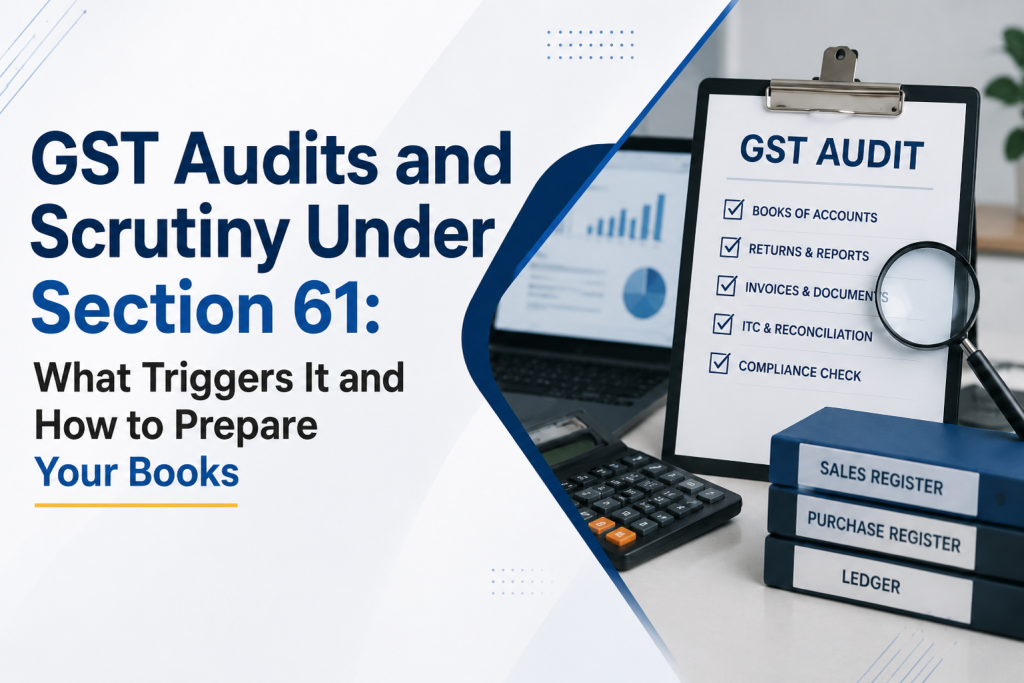
GST compliance is not limited to filing returns and paying tax on time. Businesses may also face scrutiny of their GST returns when the tax authorities identify discrepancies or inconsistencies in the information available to them. Section 61 of the CGST Act allows the proper officer to scrutinise returns and related particulars to verify their correctness. If a discrepancy is noticed, the taxpayer may be asked to provide an explanation.
For businesses in Ahmedabad, maintaining accurate books and regularly reviewing GST data can make this process much easier. Taking guidance from a GST Audit Consultant in Ahmedabad can also help businesses identify potential issues before they attract unnecessary attention from the authorities.
What Is GST Scrutiny Under Section 61?
GST scrutiny is essentially a verification exercise carried out by the proper officer. The officer examines the information available in GST returns and other related data to identify possible discrepancies.
Under Section 61, if the explanation provided by the registered person is acceptable, the matter can be closed without further action. If the taxpayer does not provide a satisfactory explanation within the prescribed period, or does not take corrective action after accepting the discrepancy, further proceedings may be initiated under the applicable provisions.
The scrutiny process should therefore not be viewed as something that automatically means tax evasion has occurred. A discrepancy may arise because of an accounting error, reporting difference, timing issue, or incorrect classification.
What Can Trigger GST Scrutiny?
There is no single factor that guarantees selection for scrutiny. GST authorities use information available through returns and other sources to identify discrepancies and risks. CBIC has also implemented an automated return scrutiny module that uses data analytics and identified risks for selecting returns for scrutiny.
Some common areas that may attract attention include differences between sales reported in different GST returns, unusual input tax credit claims, mismatches between available information and return data, tax liability differences, and irregularities in reporting.
For example, if outward supplies reported in one return do not reasonably align with other GST information, the difference may require clarification. Similarly, significant variations in input tax credit or tax liability may require businesses to review their supporting records.
Keep Your Sales Records Properly Reconciled
One of the most important steps for GST compliance is maintaining proper sales records. Your books of accounts, invoices, and GST returns should present a consistent picture of business transactions.
Businesses should regularly reconcile sales recorded in their accounting software with the figures reported in GST returns. Credit notes, debit notes, cancelled invoices and amendments should also be reviewed carefully.
If differences are identified, do not simply ignore them until a notice arrives. Correcting genuine mistakes within the applicable legal framework and maintaining supporting records can make future explanations much easier.
Review Your Input Tax Credit Regularly
Input tax credit is another area that deserves careful attention. Businesses should maintain proper purchase invoices and verify whether the claimed credit is supported by the relevant records and applicable GST provisions.
Instead of checking ITC only at the time of filing a return, businesses should perform regular reconciliations. This can help identify duplicate entries, missing invoices, incorrect GSTIN details, and other discrepancies.
Working with a GST Consultant in Ahmedabad can help businesses establish a regular reconciliation process and review potentially problematic transactions before filing returns.
Maintain Proper Books and Supporting Documents
Good bookkeeping is one of the strongest defences against confusion during GST scrutiny. Businesses should maintain invoices, purchase records, sales records, credit notes, debit notes, payment records, expense documents, and other relevant supporting information in an organised manner.
The accounting records should also agree with the figures reported in GST returns. If the books show one figure while the GST return shows another, the business should be able to explain the reason with appropriate documentation.
Using professional Accounting Services Ahmedabad can help businesses maintain systematic records and reduce the possibility of errors caused by incomplete or inconsistent bookkeeping.
What Happens After an ASMT 10 Notice?
When a discrepancy is identified during scrutiny, the proper officer can issue Form GST ASMT 10 and communicate the discrepancy to the taxpayer. The registered person can accept the discrepancy and take the required corrective action, or provide an explanation in Form GST ASMT 11. If the explanation is found acceptable, the officer can issue Form GST ASMT 12.
The law provides a period of up to thirty days for the taxpayer to provide an explanation, unless a further period is permitted by the officer.
Therefore, receiving an ASMT 10 notice does not mean that the taxpayer should panic. The priority should be to understand the discrepancy, collect the relevant records, and prepare a clear response within the applicable timeline.
How Can Businesses Prepare in Advance?
The best way to prepare for GST scrutiny is to make compliance a regular activity rather than something done only after receiving a notice. Businesses should reconcile their sales and purchase data periodically, review ITC claims, verify GST returns against accounting records, and maintain proper documentation.
It is also useful to maintain a clear record of corrections and adjustments made in the books. If a difference occurs because of a timing issue or an accounting treatment, the supporting explanation should be readily available.
Businesses can also consider professional GST Filing Services Near Me when they need regular assistance with return preparation, reconciliation, and GST compliance management.
Final Thoughts
GST scrutiny under Section 61 is designed to verify the correctness of returns and identify discrepancies using the information available to the tax authorities. With increasing use of data analytics and automated scrutiny, maintaining accurate and consistent records has become even more important.
Businesses should not wait for a scrutiny notice before reviewing their books. Regular reconciliation, proper documentation, and timely GST compliance can significantly improve their preparedness. If a notice is received, a clear explanation supported by reliable records can help the business respond appropriately and avoid unnecessary complications.