Starting a business as a sole proprietorship is one of the easiest ways to enter the market in India. Many small business owners begin their journey with a proprietorship because of simple compliance and low setup costs. However, as the business grows, many entrepreneurs prefer converting their proprietorship into a private limited company for better credibility, investment opportunities, tax planning, and business expansion.
A private limited company structure offers limited liability protection, a separate legal identity, and improved trust among clients and investors. If you are planning to scale your business, this transition can be a smart move for long-term growth.
In this blog, we will explain the complete process of converting a sole proprietorship into a private limited company in a simple and practical way.
Why Convert a Sole Proprietorship into a Private Limited Company?
A proprietorship business and the owner are legally considered the same entity. This means the owner is personally responsible for all business liabilities and debts. As the business expands, this structure may create financial and legal risks.
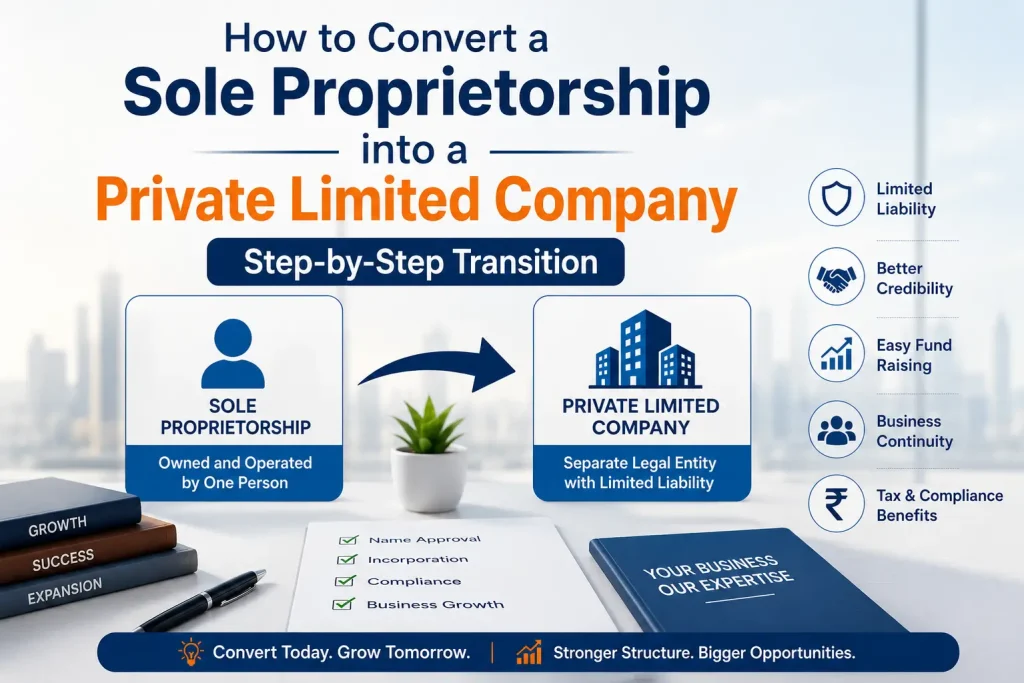
On the other hand, a private limited company is a separate legal entity. It offers limited liability protection to directors and shareholders. It also helps businesses raise funds easily from investors and financial institutions.
Many business owners looking for Company Registration Ahmedabad services choose private limited company registration because it improves business credibility and supports future growth plans.
Benefits of Converting into a Private Limited Company
Limited Liability Protection
In a private limited company, the liability of shareholders is limited to their share capital contribution. Personal assets remain protected in case of business losses or liabilities.
Better Business Credibility
Private limited companies are more trusted by banks, vendors, investors, and corporate clients. This structure creates a professional image in the market.
Easy Fund Raising
Investors and venture capital firms usually prefer investing in private limited companies instead of proprietorship firms.
Business Continuity
A private limited company continues to exist even if ownership changes. This ensures long-term stability and business continuity.
Tax and Compliance Benefits
Although compliance requirements are higher, private limited companies can enjoy various tax planning benefits and structured financial management.
Important Conditions Before Conversion
Before starting the conversion process, business owners should keep the following points in mind:
- Minimum two directors are required.
- A minimum of two shareholders is mandatory.
- One director must be an Indian resident.
- The proposed company name should be unique.
- Proper documentation of the proprietorship business should be available.
Businesses already using Proprietorship Registration Services Ahmedabad can smoothly transition into a private limited structure with professional guidance.
Step-by-Step Process to Convert a Proprietorship into a Private Limited Company
Step 1: Obtain Digital Signature Certificate
All proposed directors must obtain a Digital Signature Certificate or DSC. This is required for filing online forms with the Ministry of Corporate Affairs.
Step 2: Apply for a Director Identification Number
Each director must obtain a Director Identification Number or DIN. This identification is mandatory for becoming a company director in India.
Step 3: Reserve the Company Name
The next step is selecting and reserving a unique company name through the MCA portal. The name should follow government naming guidelines and should not match existing registered companies.
Businesses searching for new company registration in Ahmedabad often seek expert consultation to ensure faster name approval and proper documentation.
Step 4: Draft MOA and AOA
The Memorandum of Association and Articles of Association are prepared during incorporation.
The MOA defines the company’s objectives and business activities.
The AOA contains the internal rules and management structure of the company.
Step 5: Incorporate the Private Limited Company
The incorporation application is filed with the Registrar of Companies along with the required documents, such as:
- PAN card and Aadhaar card of directors
- Address proof
- Passport-sized photographs
- Business address proof
- Utility bill
- NOC from the property owner
After successful verification, the Registrar issues the Certificate of Incorporation.
Step 6: Transfer Business Assets and Licenses
Once the company is incorporated, the proprietorship business assets, liabilities, licenses, contracts, and bank accounts should be transferred to the newly formed private limited company.
This may include:
- GST registration update
- Bank account transfer
- Vendor agreement updates
- Employee transfer
- Trademark assignment, if applicable
Businesses operating under Proprietorship Firm Registration Ahmedabad often require professional support during this transfer stage to avoid compliance issues.
Step 7: Apply for PAN, TAN, and GST
After incorporation, the company must apply for:
- Company PAN
- TAN
- GST Registration, if applicable
The new private limited company becomes a completely separate legal entity from the old proprietorship business.
Documents Required for Conversion
Here are the commonly required documents:
- Proprietor PAN card
- Aadhaar card
- Address proof
- Passport-size photo
- Electricity bill or utility bill
- Rental agreement or property documents
- Bank statement
- GST certificate, if available
- Existing business registration proof
Proper documentation helps avoid delays during company registration.
Common Challenges During Conversion
Many business owners face issues such as:
- Incorrect documentation
- Name approval rejection
- Compliance confusion
- Delay in transferring licenses
- GST migration issues
Professional consultancy services can simplify the entire process and reduce unnecessary delays.
How Professional Experts Can Help?
Converting a proprietorship into a private limited company involves legal, tax, and compliance procedures. Working with experienced professionals ensures:
- Proper documentation
- Fast incorporation process
- Accurate compliance filing
- Hassle-free registration
- Guidance for tax and legal formalities
If you are planning a business expansion, taking expert support for Company Registration Ahmedabad can help you complete the transition smoothly and efficiently.
Final Thoughts
A sole proprietorship is suitable for starting a small business, but as operations grow, converting into a private limited company becomes a smart business decision. It offers better legal protection, improved credibility, investment opportunities, and long-term business stability.
The conversion process may look technical, but with proper planning and professional assistance, it can be completed smoothly. Whether you are running a trading business, service company, startup, or manufacturing unit, upgrading your business structure can open new growth opportunities.
If you are looking for trusted support for new company registration in Ahmedabad, choosing experienced professionals can make the entire transition process faster, compliant, and stress-free.